Turn the PANCE Blueprint Into a Weekly Plan
Turn the NCCPA PANCE blueprint into a weekly study plan balancing organ systems, task areas, mixed question blocks, deliberate review, and checkpoints.
The PANCE blueprint gives you percentages, but percentages alone do not tell you what to study on Tuesday, how many mixed questions to complete on Saturday, or when a weak area deserves more time. The practical answer is to convert the blueprint into a two-dimensional weekly practice plan: organize questions by medical content, audit them by clinical task, and reserve substantial time for deliberate review.
That distinction matters because the PANCE blueprint is not simply a list of organ systems. The current NCCPA PANCE content blueprint is effective as of January 2025 and categorizes the examination along two dimensions: diseases and disorders encountered by PAs, and the knowledge and skills used when treating patients. Most medical content questions therefore test an organ system and a clinical task at the same time.
A cardiovascular question, for example, might primarily test history and physical examination, diagnostic studies, diagnosis, prevention, clinical intervention, or pharmaceutical therapeutics. An effective plan must prepare you to recognize both what condition is being presented and what the question asks you to do next.
Read the PANCE Blueprint as a Matrix, Not Two Separate Lists
The NCCPA blueprint allocates 94% of the examination to medical content and 6% to professional practice. Cardiovascular content has the largest individual allocation at 11%, followed by pulmonary at 9%; gastrointestinal/nutrition and musculoskeletal content each receive 8%. The task dimension places its greatest emphasis on formulating the most likely diagnosis at 18%, followed by history and physical examination and clinical intervention at 16% each, and pharmaceutical therapeutics at 15%. These are exam allocations, not prescriptions for isolated study blocks.
Do not create one plan for organ systems and a completely separate plan for tasks. That approach duplicates work and makes it difficult to see whether your practice resembles the blueprint. Instead, assign each question two tags whenever possible:
- **Medical content:** cardiovascular, pulmonary, neurologic, reproductive, or another blueprint category
- **Clinical task:** diagnosis, diagnostic studies, clinical intervention, pharmaceutical therapeutics, or another task category
A question about a patient with dyspnea might be tagged pulmonary plus diagnostic studies. A question asking for first-line treatment of community-acquired pneumonia might be pulmonary plus pharmaceutical therapeutics. These tags reveal whether you are practicing clinical decisions across multiple systems rather than merely accumulating pulmonary facts.
Professional practice should remain its own planned category. NCCPA lists it at 6% and notes that it is the exception to the usual dual coding of medical content and task areas.
The blueprint also states that approximately 8%–10% of the examination covers general surgical topics and 12%–15% focuses on conditions in pediatric patients. Treat surgery and pediatrics as overlays across organ systems, not as extra allocations added to the percentages. A pediatric asthma question still contributes to pulmonary coverage, while a postoperative complication can contribute to the relevant organ system and clinical task.
Build a Two-Dimensional PANCE Practice Matrix

Start with a 100-question weekly planning unit. This makes the blueprint percentages easy to translate: 11 cardiovascular questions, nine pulmonary questions, eight gastrointestinal/nutrition questions, and so forth. If your weekly capacity is 150 or 200 questions, multiply each allocation by 1.5 or 2 and round sensibly.
A practical 100-question medical-content queue looks like this:
| Weekly group | Blueprint categories | Questions | |---|---|---:| | High-volume systems | Cardiovascular 11, pulmonary 9, gastrointestinal/nutrition 8, musculoskeletal 8 | 36 | | Mid-volume systems | Infectious diseases 7, neurologic 7, psychiatry/behavioral science 7, reproductive 7, endocrine 6, EENT 6 | 40 | | Lower-volume systems | Hematologic 5, renal 5, dermatologic 4, genitourinary 4 | 18 | | Professional practice | Professional practice 6 | 6 | | **Total** | | **100** |
The lower-volume categories are not optional. Their smaller percentages make them easy to postpone until they become large cumulative gaps. Include them every week or use a two-week cycle that preserves their proportional representation.
Next, audit the same questions by task area. Across a 100-question planning unit, your approximate targets are:
| Task area | Target | |---|---:| | Formulating the most likely diagnosis | 18 | | History and physical examination | 16 | | Clinical intervention | 16 | | Pharmaceutical therapeutics | 15 | | Health maintenance, education, and prevention | 11 | | Diagnostic and laboratory studies | 10 | | Applying basic scientific concepts | 8 | | Professional practice | 6 |
You do not need to hit every cell of the system-by-task matrix each week. You do need to check whether your question selection repeatedly neglects a task. If 40% of your practice asks for diagnoses but very few questions require treatment selection, the organ-system percentages may look correct while your task balance remains distorted.
If your question bank does not provide task filters, tag questions after answering them. The verb in the stem or lead-in often identifies the task: *diagnose, evaluate, interpret, manage, counsel,* or *prescribe*. When a question spans several tasks, record the final decision required to earn the point.
Use a Six-Day Weekly Workflow
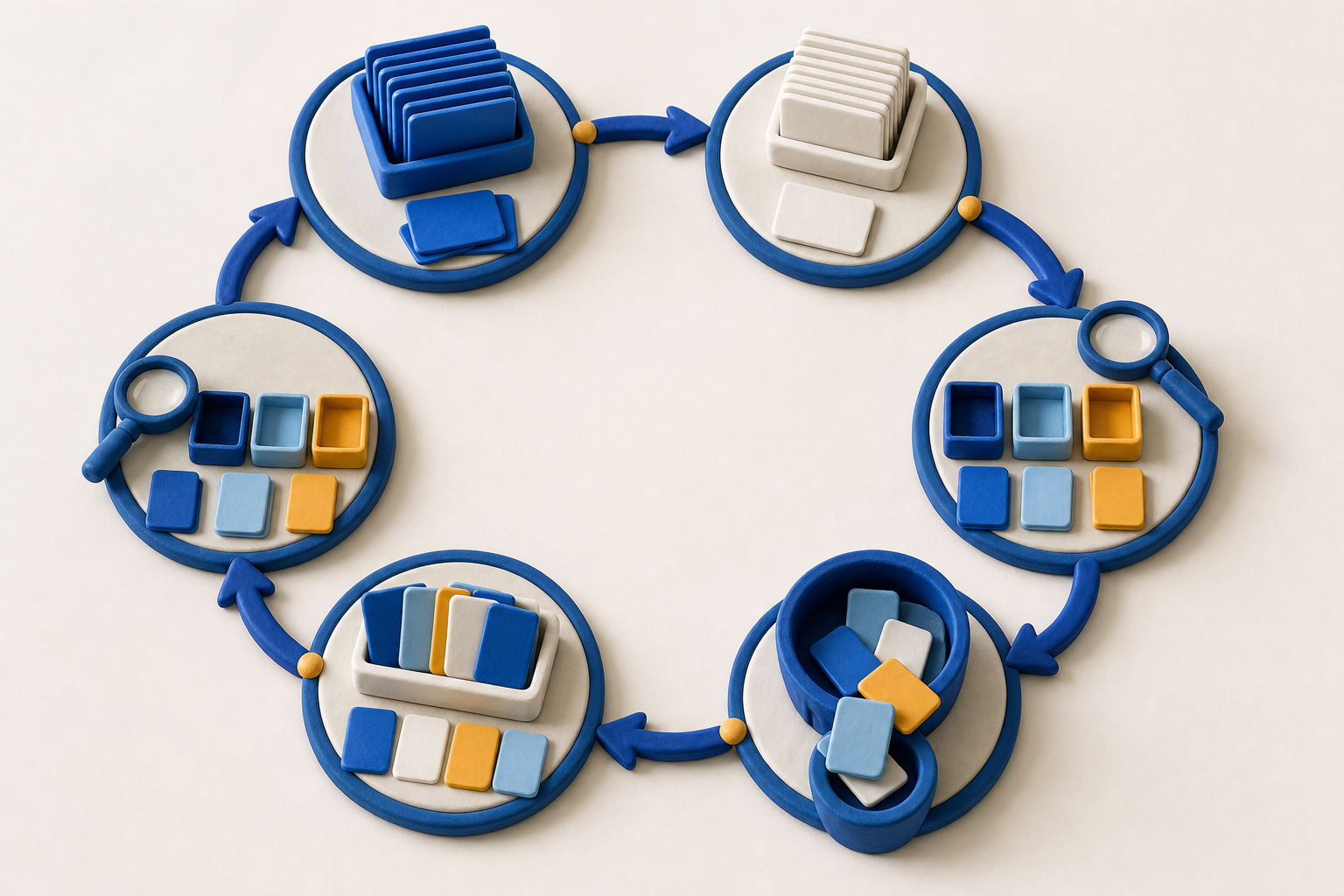
The following schedule provides 100 new questions while protecting review time. Adjust block size before removing review sessions; a smaller block that you analyze is more valuable than a larger block you barely inspect.
| Day | New-question work | Review and planning work | |---|---|---| | Monday | 15 focused questions from two planned systems | Review every miss and uncertain correct answer; assign system and task tags | | Tuesday | 15 focused questions from two different systems | Reconstruct the reasoning for missed diagnosis and diagnostic-study questions | | Wednesday | 20 timed mixed questions | Compare mixed-block decisions with Monday and Tuesday’s focused performance | | Thursday | 15 focused questions targeting uncovered blueprint categories | Reattempt selected earlier misses without viewing notes | | Friday | 15 focused or semi-mixed questions | Audit task distribution and add an underrepresented task if needed | | Saturday | 20 timed mixed questions | Complete the weekly matrix, error review, and next-week adjustments | | Sunday | No required new questions | Brief cumulative retrieval session, rest, or catch-up without expanding next week’s workload |
Focused blocks are useful when you are building an initial framework because they reduce the number of possible diagnoses and allow repeated comparison within a system. Mixed blocks should still appear every week because PANCE questions will not announce the relevant category before you read the vignette.
Research supports the broader learning principles behind this structure, although no study establishes one perfect PANCE schedule. In a cluster-randomized study of medical trainees, case-based retrieval practice with immediate feedback produced greater improvement on a knowledge assessment than conventional lectures. A separate eight-week study of interleaved problem practice found stronger performance on novel physics problems after interleaved rather than conventionally grouped assignments. Applying interleaving to PANCE preparation is a practical inference: mixed blocks require you to identify the system, discriminate among competing diagnoses, and choose a clinical action without being told which framework to use.
Do not interpret this as a requirement to make every session mixed. Early focused practice and later mixed application serve different purposes. A useful progression is to begin with roughly two focused blocks for every mixed block, move toward an even split, and make mixed practice dominant during the final phase of preparation.
Turn Every Question Block Into Deliberate Review
A block is not finished when you see the score. For each missed question—and each correct answer reached through guessing—complete a short review cycle:
- **Retrieve before rereading.** State the diagnosis or next step you selected and why.
- **Locate the decision point.** Identify the finding, contraindication, risk factor, or timeline that should have changed your answer.
- **Classify the error.** Use one label: knowledge gap, data interpretation, differential diagnosis, management sequencing, medication selection, or execution error.
- **Write one transferable rule.** Keep it concise enough to apply to another vignette.
- **Schedule a reattempt.** Revisit the concept through a new question or a closed-book prompt later in the week.
The exact reattempt interval is a practical choice rather than an NCCPA policy. A reasonable default is to revisit difficult material within several days, then again in a later mixed block. If you can only recognize the answer while reading your explanation, retrieval has not yet become reliable.
Avoid copying full explanations into an error log. Record the smallest rule that would improve a future decision. For example: “In a hemodynamically unstable patient, stabilize before pursuing the complete diagnostic workup.” The purpose is to change how you answer the next question, not to produce another textbook.
Measure Progress With Weekly Checkpoints
Raw accuracy alone cannot tell you whether your preparation is balanced. Use four checkpoints at the end of each week.
Coverage checkpoint
Confirm that all major blueprint categories appeared in the planned proportions and that smaller categories were not silently skipped. Evaluate pediatrics and general surgery as cross-system overlays. If your question bank cannot generate the exact allocation in one week, measure coverage over a rolling two-week window.
Task checkpoint
Count the primary task tested by each question. If one task is substantially underrepresented, deliberately select more of it the following week. When filters are unavailable, choose cases or resources that naturally emphasize the missing action—for example, pharmacology questions for pharmaceutical therapeutics or screening cases for prevention.
Reasoning checkpoint
Review error types rather than only topics. Ten misses caused by premature closure require a different intervention from ten misses caused by unfamiliar drug adverse effects. The first calls for stronger differential-diagnosis habits; the second calls for targeted knowledge retrieval.
Transfer checkpoint
Compare your recent timed mixed blocks with your previous four mixed blocks. Look for a stable or improving trend in accuracy, pacing, and the number of answers marked uncertain. Do not treat a single question-bank percentage as a PANCE passing prediction. Different banks contain different questions and difficulty levels; your trend and error pattern are more actionable than an isolated number.
Adjust the Next Week Without Abandoning the Blueprint
Use your checkpoint results to make controlled changes rather than rebuilding your schedule after every disappointing block.
| What you observe | Likely problem | Next-week adjustment | |---|---|---| | One system repeatedly underperforms in focused and mixed blocks | Foundational knowledge or illness-script gap | Add one focused block for that system while keeping its questions in mixed practice | | Focused accuracy is strong but mixed performance falls | Difficulty identifying the relevant framework | Increase mixed blocks and compare commonly confused diagnoses across systems | | Diagnosis is strong but management questions are weak | Task imbalance | Shift part of the weekly queue toward clinical intervention and pharmaceutical therapeutics | | Many correct answers are marked uncertain | Fragile retrieval or poor discrimination | Reattempt without choices and explain why the closest alternative is wrong | | Review consumes several hours per block | Notes are too detailed or weaknesses are too broad | Limit each question to one error label and one transferable rule; reduce new-question volume temporarily | | Small systems disappear from the plan | Percentage-based procrastination | Preassign their questions before filling high-volume categories |
Keep the blueprint as your baseline allocation, then use performance data for modest emphasis. A weak system might receive an additional focused block, but it should not consume the entire week unless you are in an early remediation phase. Otherwise, urgent weaknesses can crowd out broad exam readiness.
Common Ways Blueprint-Based Plans Break Down
**Studying percentages instead of decisions.** Memorizing that cardiovascular content is 11% does not prepare you to distinguish stable angina from acute coronary syndrome or choose the appropriate next step. Attach each system to task-based questions.
**Answering questions without reviewing uncertain correct responses.** A lucky answer inflates the block score but does not demonstrate dependable reasoning. Review any item you could not confidently justify.
**Using only focused blocks.** System-specific practice can create cue dependence: you know every question is cardiovascular before reading it. Preserve weekly mixed blocks so categorization becomes part of the task.
**Switching to all-mixed practice too early.** If you lack a workable framework for common presentations, constant mixing can produce repeated guessing. Use focused blocks to build the framework, then test it under mixed conditions.
**Trying to correct every weakness simultaneously.** Select one content emphasis and one task emphasis for the next week. Keep the remaining questions blueprint-proportional.
**Treating question volume as the outcome.** The goal is not to finish the largest possible number of questions. The goal is to improve future clinical decisions through retrieval, feedback, reattempts, and balanced exposure.
Final Takeaways
- Convert the PANCE blueprint into a two-dimensional matrix that tracks both medical content and clinical tasks.
- Use a 100-question planning unit—or a scaled version—to preserve blueprint proportions without studying categories in isolation.
- Combine focused blocks for framework building with weekly timed mixed blocks for discrimination and transfer.
- Track coverage, task balance, reasoning errors, and mixed-block trends before adjusting the next week.
- Protect deliberate review time; every miss should produce a concise rule and a later retrieval opportunity.
Build your next blueprint-based week with Explore focused exam preparation at Core Test Prep.