Six-Week NCLEX Plan Using Clinical Judgment Feedback
Build a six-week NCLEX plan using clinical judgment feedback, case studies, adaptive practice, content repair, and weekly progress checkpoints.
Six weeks is enough time to make meaningful NCLEX progress—but only if practice results change what you study next. A fixed calendar that assigns the same topics regardless of performance can leave clinical judgment weaknesses untouched. A feedback-driven plan works differently: every question block and case study produces evidence about whether you are missing cues, choosing the wrong priority, or overlooking a safety constraint.
The plan below combines targeted content repair, mixed adaptive practice, case studies, and weekly checkpoints. It is designed for roughly 12–15 study hours per week, but the sequence matters more than the exact number of hours. If your schedule is tighter, reduce question volume rather than eliminating review and feedback.
The checkpoints and percentages in this article are planning tools, not official NCLEX passing standards or score predictions.
Why clinical judgment feedback should drive the plan
The official NCLEX preparation resources include sample case studies, an exam preview, a candidate tutorial, and test plans containing clinical judgment information. Use those resources early so your preparation reflects the exam’s item formats and expectations rather than relying only on familiar stand-alone questions.
**Evidence-backed principle:** Repeated retrieval spread across time can support retention. In a large randomized study involving physicians and residents, spaced repetition improved learning and knowledge transfer compared with no spaced repetition. That population and setting differ from NCLEX preparation, so the study does not prove that a particular six-week schedule will produce a passing result. It does support revisiting weak concepts through questions instead of studying each topic once and moving on.
**Evidence-backed principle:** Feedback is most useful when it leads to a subsequent task. A health professions education review found that feedback processes should include follow-up opportunities to work on identified learning and performance goals. That supports turning each weekly review into a concrete plan for the next practice cycle rather than merely recording a score. See the review of structured feedback processes in health professions education.
**Practical recommendation:** Classify errors by the thinking step that failed. A content label such as “cardiac” is not specific enough. Record whether you failed to notice a relevant cue, misjudged priority, or selected an unsafe action. That classification tells you what kind of practice should follow.
Set up a feedback system before Week 1
Create one error log with these fields:
- Client problem or content area
- Item format: stand-alone question or case study
- Your selected answer or action
- Key cue you used
- Important cue you missed or misinterpreted
- Error cluster: cue recognition, prioritization, safety, content recall, or test process
- Correct decision rule in one sentence
- Follow-up task and due date
- Result when retested
Keep entries brief. The log is not a second textbook. A useful entry might read: “Postoperative client with increasing restlessness and tachycardia. I focused on pain and missed a possible early oxygenation problem. Cue-recognition error. Retest respiratory deterioration cues in 48 hours.”
Establish a baseline with a mixed set of approximately 50–75 questions plus at least one case study. Use timed conditions if you can finish without rushing blindly. Review every uncertain answer, including correct guesses.
Your baseline should produce three numbers:
- Percentage of reviewed errors involving missed or misread cues
- Percentage involving priority or sequencing
- Percentage involving safety, contraindications, or escalation
Do not build the six-week calendar around the lowest content category alone. Build it around the most frequent reasoning failure, then attach the relevant content to that failure.
The six-week NCLEX plan
| Week | Main objective | Practice workflow | Content repair | Weekly checkpoint | |---|---|---|---|---| | 1 | Diagnose error patterns | Baseline mixed block, two shorter mixed blocks, and two case studies | Repair only prerequisites exposed by practice | Identify the top reasoning cluster and three recurring content gaps | | 2 | Improve cue recognition | Three mixed blocks plus three case studies with deliberate cue extraction | Review assessment findings, trends, and expected versus unexpected data | Determine whether missed-cue errors are becoming less repetitive | | 3 | Strengthen prioritization | Three mixed or adaptive blocks and three case studies emphasizing first actions | Review instability, urgency, sequencing, and delegation principles | Compare first-action errors with the Week 1 baseline | | 4 | Tighten safety decisions | Three mixed blocks, medication-safety practice, and three case studies | Repair contraindications, precautions, monitoring, and escalation gaps | Audit unsafe choices and confidence in those choices | | 5 | Integrate under exam-like conditions | Two longer mixed adaptive sessions, two shorter repair sets, and four case studies | Use short, error-triggered refreshers only | Check performance stability across topics and item formats | | 6 | Consolidate without cramming | Two comprehensive mixed sessions early in the week, then lighter targeted practice | Review compact notes, recurring rules, and high-frequency personal errors | Confirm that old error clusters no longer dominate; taper before test day |
Weeks 1 and 2: Find the pattern and repair cue recognition
During Week 1, spend about half your time answering questions and half reviewing them. This slower ratio is intentional. You are building a diagnostic picture, not chasing volume.
For each case study, pause before viewing options and write three items:
- The client’s likely immediate problem
- The two or three cues that most strongly support it
- The additional finding that would change your concern level
In Week 2, use a “cue before conclusion” routine. Separate relevant findings from background information, compare current data with previous data, and identify trends. If you miss a laboratory value because you did not know its meaning, schedule content repair. If you knew the meaning but overlooked the value, schedule cue-extraction practice instead.
A cue-recognition repair session should include 15–20 minutes of content review followed immediately by 8–12 questions requiring use of that content. Retest the same decision rule two or three days later with different questions.
Weeks 3 and 4: Train priority and safety separately
Priority and safety errors can look similar, but they require different repairs.
A **priority error** means you recognized the problem but chose the wrong first client, action, or sequence. Before answering, state the immediate threat and ask which available action addresses it most directly.
A **safety error** means your choice created avoidable risk, ignored a contraindication, failed to verify essential information, or delayed necessary escalation. Review safety misses even when the underlying disease content feels familiar.
During Week 3, add short “first and why” drills. Answer 10–15 priority questions, but write a one-line reason before checking each rationale. During Week 4, perform a safety audit after every block: identify any selected action that could cause harm and name the safeguard you should have applied.
Weeks 5 and 6: Integrate, stabilize, and taper
By Week 5, most practice should be mixed. Continue adaptive sessions if your question resource offers that mode, but do not let the resulting score replace error analysis. Mixed practice reveals whether a decision rule transfers when the topic is not announced in advance.
Use longer sessions to rehearse sustained attention, followed by detailed review on the same day or the next morning. Case studies remain essential because they require you to update decisions as information develops.
Week 6 is not the time for a complete content restart. Early in the week, complete your final longer mixed sessions. Later, use short sets to verify repaired weaknesses. Reduce intensity before test day so fatigue does not become the final variable you introduce.
How feedback changes next week’s plan
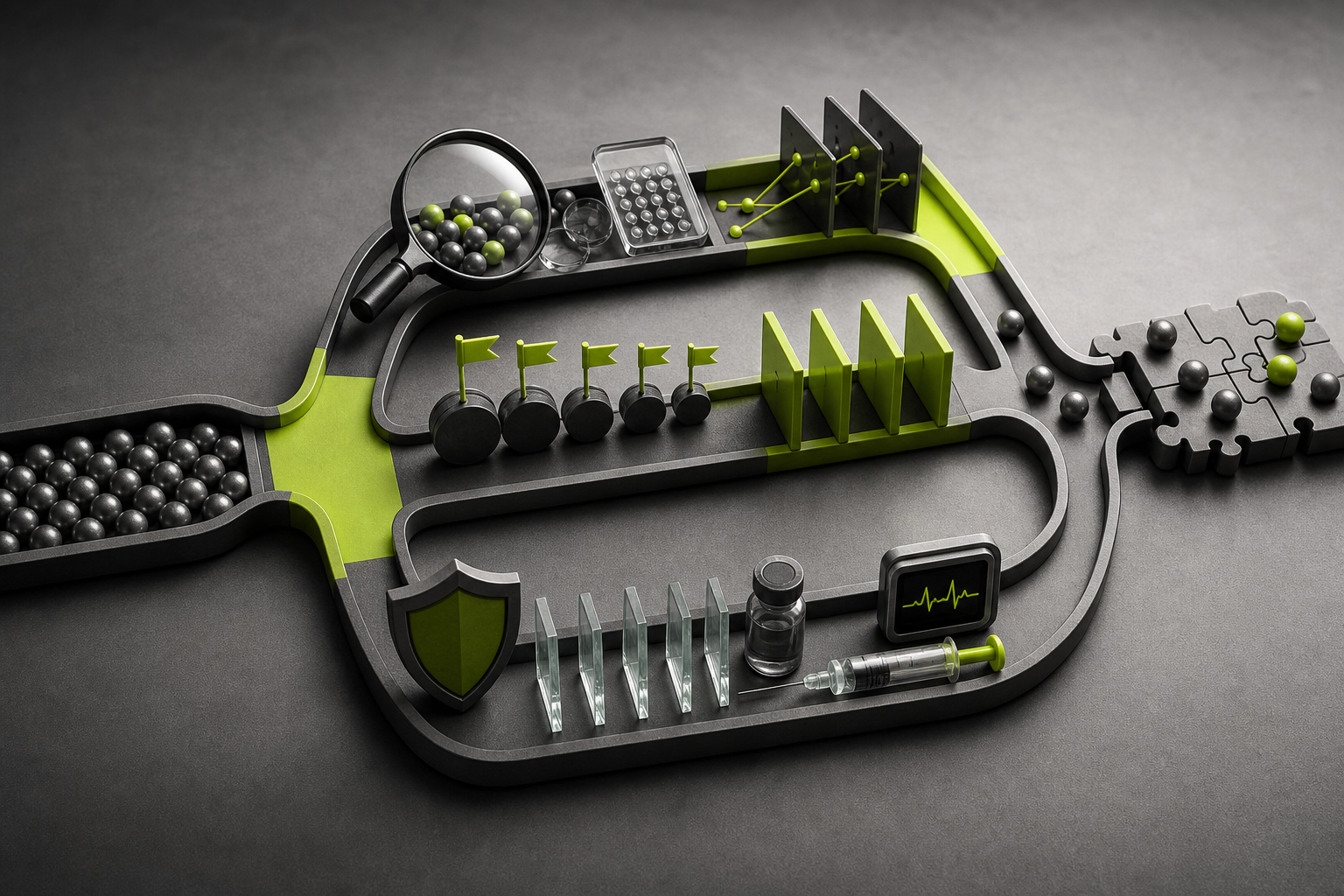
Use the following decision table at every weekly checkpoint. Base the decision on reviewed errors, not raw scores alone.
| Dominant error cluster | What the pattern usually looks like | Add next week | Reduce next week | Progress signal | |---|---|---|---|---| | Cue recognition | You overlook trends, dismiss abnormal findings, or focus on vivid but less relevant details | Case studies, cue-highlighting drills, comparison of expected and unexpected findings | Broad passive reading | You identify decisive cues before viewing answer options | | Prioritization | You identify the problem but choose a delayed, indirect, or lower-urgency action | First-action drills, sequencing questions, verbal justification of priorities | Memorizing isolated priority slogans | Your rationale consistently names the immediate threat and direct response | | Safety | You miss contraindications, monitoring needs, verification steps, or escalation triggers | Safety audits, medication checks, precaution review, “what could cause harm?” prompts | Speed-focused practice | Unsafe choices become uncommon and are recognized during review without prompting | | Content recall | You cannot explain the condition, intervention, or expected finding | Short focused review followed by immediate questions and spaced retesting | Additional mixed blocks on unknown material | You can retrieve and apply the rule several days later | | Test process | You misread stems, change justified answers, or run out of time | Timed short sets, stem paraphrasing, option-by-option comparison | Untimed high-volume practice | Timing improves without increasing interpretation errors |
If two clusters are close, assign approximately 60% of targeted practice to the larger cluster and 40% to the second. Continue mixed practice so improvement does not become dependent on knowing the question category in advance.
A realistic weekly workflow
A five-day study rhythm keeps feedback close to practice while allowing recovery:
- **Day 1:** Mixed adaptive block; review and classify every error.
- **Day 2:** Content repair for the largest cluster; complete a short application set.
- **Day 3:** Two case studies; use the cue-before-conclusion routine.
- **Day 4:** Mixed block plus retesting of errors from Days 1 and 2.
- **Day 5:** Weekly checkpoint, one focused drill, and planning for the next week.
- **Days 6–7:** One optional light review day and at least one rest or catch-up day.
For a three-day schedule, combine Days 1 and 2, use Day 3 for case studies, and combine Days 4 and 5. Preserve the sequence: practice, analyze, repair, retest, adjust.
Progress checkpoints that reveal real improvement
At the end of each week, evaluate four dimensions:
- **Recurrence:** Are you repeating the same error after reviewing it?
- **Transfer:** Can you apply the decision rule to a different client or condition?
- **Calibration:** Does your confidence match the quality of your reasoning?
- **Stability:** Does the skill hold during mixed, timed, and case-based practice?
Use a simple red-yellow-green status for each major cluster:
- **Red:** The error repeats or you still cannot explain the correct reasoning.
- **Yellow:** You improve in focused drills but remain inconsistent in mixed practice.
- **Green:** You apply the reasoning accurately across unfamiliar examples and can explain why competing actions are weaker.
A green label does not mean permanent mastery. Retest that cluster in a later mixed session. A red cluster should receive more targeted practice next week, not merely more total questions.
Failure modes that can derail the six weeks
**Chasing question counts:** High volume is not useful when the same mistake repeats unnoticed. Set a review requirement, such as completing the error classification before starting another block.
**Turning every miss into a content problem:** More reading will not fix an attention or sequencing failure. Identify whether knowledge was absent or simply not used.
**Practicing only weak categories:** Focused repair is necessary, but exclusive category practice supplies clues about the answer. Keep at least half of weekly questions mixed after the baseline week.
**Reviewing rationales passively:** Before reading the explanation, state why your choice was wrong and what rule would produce a better decision. Then create a dated retest task.
**Using accuracy as the only checkpoint:** A correct guess can hide a weak process. Track confidence and reasoning quality, especially in case studies.
**Changing the plan every day:** Individual blocks can be noisy. Make major allocation changes at the weekly checkpoint unless you discover a serious knowledge or safety gap requiring immediate repair.
Final takeaways
- Let reviewed error patterns—not a rigid topic list—determine each week’s emphasis.
- Separate cue-recognition, prioritization, and safety failures because each needs a different repair task.
- Follow content review immediately with application questions, then retest the rule several days later.
- Keep mixed practice and case studies in every week so repaired skills transfer to unfamiliar scenarios.
- Use weekly checkpoints to convert feedback into specific assignments for the next study cycle.
For structured practice that supports a focused six-week workflow, Explore focused exam preparation at Core Test Prep.